Architectural Wonders of the Costa del Sol
Planning a trip to the Costa del Sol and wondering if there’s more to see than just beaches? You’re in luck! While the stunning coastline is a major draw, this region of sout…
Planning a trip to the Costa del Sol and wondering if there’s more to see than just beaches? You’re in luck! While the stunning coastline is a major draw, this region of southern Spain is also packed with incredible architectural treasures, offering a rich tapestry of history and design. From ancient Roman ruins to Moorish palaces and modern marvels, there’s plenty to explore beyond the sand and sun. Let’s dive into some of the must-see architectural wonders that dot this beautiful stretch of Spain.
The Costa del Sol has been a crossroads of civilizations for millennia, and its architecture reflects this deep history. Before the Moors arrived, the Romans left a significant mark, building cities, theaters, and villas. Even earlier, the Phoenicians established settlements, trading and building ports that laid the groundwork for future development.
Roman Theater of Málaga
Right in the heart of Málaga, nestled at the foot of the Alcazaba, you’ll find the Roman Theater. It’s a remarkable find, having been rediscovered only in 1951. For centuries, its stones were actually repurposed for the Alcazaba itself, which is a neat bit of historical recycling.
- What to See: You can walk around the remains of the seating area (cavea), the stage (proscenium), and the orchestra pit. There’s also an interpretive center nearby that provides context and explains how the theater was used.
- Why It’s Interesting: It offers a direct link to Roman life in ancient Malaca. Imagine gladiatorial contests or theatrical performances taking place on that very stage. It’s a tangible piece of history sitting incongruously yet perfectly amidst a modern city.
- Practical Tip: It’s often free to enter the viewing area. Combine your visit with the Alcazaba and the Picasso Museum, as they are all within a short walking distance.
Roman Ruins of Acinipo, Ronda
A bit further inland, near the famous town of Ronda, lies the ancient Roman city of Acinipo. Often referred to as “Old Ronda,” this site offers a different perspective on Roman architecture, feeling more rugged and less restored than its Málaga counterpart.
- What to See: The most striking feature is the Roman theater, carved directly into the rock face. The stage area is remarkably well-preserved. You can also see foundations of houses, thermal baths, and other public buildings.
- Why It’s Interesting: Its remote, elevated location gives it a unique atmosphere. The natural rock integration of the theater is a testament to Roman engineering and their understanding of topography. It feels like stepping back into a truly ancient, less-touched past.
- Practical Tip: It’s a bit off the beaten path, so a car is highly recommended. The views from the site, especially towards the surrounding countryside, are spectacular. Bring water, particularly if visiting in warmer months, as there’s limited shade.
The Enduring Legacy of Al-Andalus: Moorish Masterpieces
The nearly 800 years of Moorish rule in Andalusia left an indelible mark on the region’s architecture. This period, known as Al-Andalus, brought sophisticated engineering, intricate decorative arts, and a unique blend of Islamic and local styles. The Costa del Sol is home to several excellent examples of this rich heritage.
The Alcazaba of Málaga
Dominating the Málaga skyline and sitting majestically on a hill overlooking the port, the Alcazaba is a fortified palace from the Taifa period (11th century) and later additions by the Nasrid dynasty. It’s one of the best-preserved Moorish fortresses in Spain.
- What to See: Explore the winding paths, beautiful courtyards filled with orange trees and fountains, and stunning defensive walls with panoramic views of the city. Look out for the intricate tilework (azulejos), horseshoe arches, and the military and residential zones.
- Why It’s Interesting: It’s a fantastic example of military and palatial architecture merging. The strategic location, coupled with the sophisticated water systems and lush gardens, showcases the advanced urban planning of the era. The blend of defensive strength and aesthetic beauty is captivating.
- Practical Tip: Wear comfortable shoes, as there’s a fair amount of walking uphill and stairs. An audio guide can enhance your visit by providing detailed historical context. Consider visiting in the late afternoon to catch the sunset views over the city.
Castillo de Sohail, Fuengirola
Perched on a hill near the mouth of the Fuengirola River, the Castillo de Sohail is another significant Moorish fortress. While its origins likely date back to Roman times, the current structure is predominantly from the Umayyad caliphate of Córdoba (10th century) and later strengthened by the Nasrids.
- What to See: You can walk along the battlements, explore the inner courtyard, and appreciate the strategic views of the coastline. While less ornate than the Alcazaba of Málaga, its robust defensive structure is impressive.
- Why It’s Interesting: It served as a crucial defensive outpost, protecting the coast and the river estuary. Today, it also hosts concerts and cultural events, blending its ancient past with modern use. It gives a good sense of the military importance of these coastal fortifications.
- Practical Tip: Admission is often free. Check the local events schedule, as seeing a concert or a medieval market within the castle walls can be a memorable experience. It’s easily accessible from Fuengirola town.
Casa de la Cultura, Estepona (Original Alcazaba Site)
While Estepona doesn’t boast a fully preserved Alcazaba like Málaga or Fuengirola, the Casa de la Cultura sits on the site of what was once Estepona’s own Moorish fortress. You can still see fragments of the original walls integrated into the current building and the surrounding urban fabric.
- What to See: Look for the remaining sections of the defensive walls. While the current building is more modern, the footprint and archeological findings confirm the historical significance of the site. The area around it, with its narrow streets, still hints at its ancient layout.
- Why It’s Interesting: It’s a good example of how historical layers are often integrated into contemporary life in Spanish towns. It requires a bit more imagination than a fully intact fortress but provides insight into the widespread nature of these Moorish settlements along the coast.
- Practical Tip: While not a “grand” architectural wonder in itself, it’s worth a look if you’re exploring Estepona’s charming old town. Combine it with a stroll through the painted streets and the Orchidarium.
Renaissance and Baroque Grandeur: Ecclesiastical and Palatial Splendor
Following the Reconquista, Christian rulers began to rebuild and redecorate the region, often on the foundations of existing Moorish structures. This era saw the rise of impressive cathedrals, churches, and palaces, showcasing Renaissance and Baroque styles.
Málaga Cathedral, “La Manquita”
The Santa Iglesia Catedral Basílica de la Encarnación, or simply Málaga Cathedral, is an imposing structure that dominates the city’s old town. Its construction began in the 16th century on the site of a former mosque, but it was never truly finished, earning it the nickname “La Manquita” (The One-Armed Lady) because it only has one of its two planned towers.
- What to See: Marvel at the elaborate Baroque façade, the detailed choir stalls carved by Pedro de Mena, and the impressive altarpieces. The interior features a blend of Renaissance and Baroque elements. Don’t miss the opportunity to climb to the cathedral rooftops for incredible panoramic views of Málaga.
- Why It’s Interesting: The unfinished nature of the cathedral tells a fascinating story of financial constraints and changing priorities over centuries. Its architectural style is a captivating journey through different eras, blending traditional Gothic elements with Renaissance ambition and Baroque flourish.
- Practical Tip: There’s an entrance fee for both the cathedral interior and the rooftop tour. The rooftop tour is highly recommended for the views and a closer look at the construction. Dress respectfully, as it is an active place of worship.
Church of Santa María la Mayor, Ronda
Ronda’s main church, the Collegiate Church of Santa María la Mayor, is another striking example of post-Reconquista architecture built on the site of a former mosque. Its construction spanned several centuries, resulting in an intriguing mix of styles.
- What to See: The church features a compelling blend of Gothic, Renaissance, and Baroque elements. Pay attention to the beautiful altars, the impressive main nave, and the intricate details in the chapels. The tower, originally a minaret, now incorporates Christian additions.
- Why It’s Interesting: It’s a microcosm of Ronda’s history, reflecting the transition from Moorish to Christian rule. The different architectural styles tell the story of its long construction period and the evolving artistic tastes of the time.
- Practical Tip: There’s a small entrance fee. Located in the heart of Ronda’s old town, it’s easy to combine with visits to other local attractions like the Bullring and the Puente Nuevo.
Modernist and Contemporary Interventions
While the Costa del Sol is rich in ancient and historical architecture, it also features some interesting modernist and contemporary pieces, reflecting the region’s development as a tourist destination and a vibrant urban center.
La Malagueta Bullring, Málaga
Even if bullfighting isn’t your thing, the architecture of La Malagueta Bullring is worth appreciating. Built in 1874, it’s a stunning example of Neo-Mudéjar style, characterized by its horseshoe arches, brickwork, and geometric patterns, drawing inspiration from Moorish architecture.
- What to See: Admire the striking exterior with its red brick and white accents. Inside, the arena itself is impressive in its scale. There’s also a small bullfighting museum (Museo Taurino Antonio Ordóñez) that explains the history and traditions.
- Why It’s Interesting: It represents a specific period of Spanish architectural revival that looked back to its Moorish past for inspiration. It’s an iconic landmark of Málaga and a testament to the region’s cultural traditions, albeit a controversial one for some.
- Practical Tip: You can often walk around the outside for free. There’s a fee for the museum and to enter the arena if there isn’t an event. It’s located close to the port and the lighthouse.
Pompidou Centre, Málaga
The “Cube” or “El Cubo” of the Pompidou Centre in Málaga is a stark contrast to the historical buildings, representing a bold contemporary architectural statement. This branch of the Parisian museum is housed in a structure designed by Javier Pérez de la Fuente and Juan Antonio Marín Malavé, topped by a large, colorful glass cube.
- What to See: The exterior glass cube is an architectural focal point, especially when lit up at night. Inside, the exhibition spaces are clean and modern, designed to showcase contemporary art.
- Why It’s Interesting: It signifies Málaga’s transformation into a cultural hub. The modern design, set against the backdrop of the historic port, creates an interesting dialogue between old and new. It’s a statement piece that immediately catches the eye.
- Practical Tip: Check exhibition schedules and opening times. The area around the Pompidou Centre, the Muelle Uno, is a vibrant marina with restaurants and shops, perfect for a stroll.
Puerto Banús, Marbella
While often known for its luxury yachts and designer boutiques, Puerto Banús also stands as a fascinating example of late 20th-century luxury development and “Mediterranean Revival” architecture. Designed by architect Noldi Schreck, it aimed to evoke a traditional Andalusian village, albeit one on an incredibly grand scale.
- What to See: Stroll along the marina and observe the Mediterranean-style buildings with their white walls, terracotta roofs, and decorative elements. The overall planning aims for a picturesque, albeit hyper-real, village aesthetic.
- Why It’s Interesting: It’s a prime example of an intentionally constructed environment designed for tourism and luxury. It’s a “theme park” of traditional Andalusian architecture, executed with high-end materials and meticulous planning, representing a significant economic and social shift in the region.
- Practical Tip: It’s a great spot for people-watching and yacht-gazing. There are numerous restaurants and bars if you want to soak in the atmosphere. Parking can be challenging, especially in peak season.
Unique Architectural Gems and Local Flavors
Beyond the grand monuments, the Costa del Sol is dotted with smaller, equally charming architectural features that reflect local traditions and ongoing artistic expression. These often provide a more intimate understanding of the region’s character.
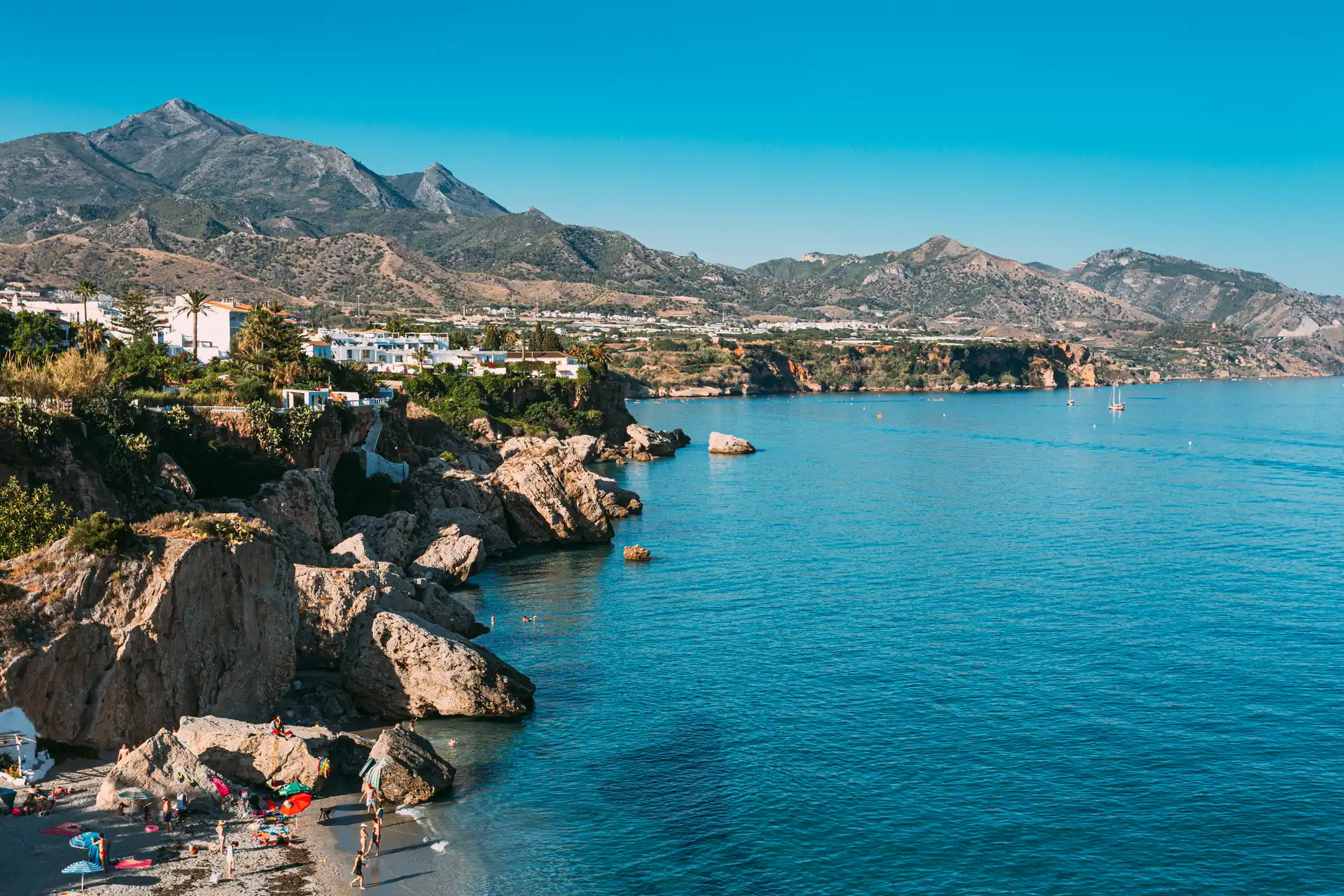
Balcón de Europa, Nerja
While not a building in itself, the Balcón de Europa (Balcony of Europe) in Nerja is an iconic architectural feature that provides a stunning vista. This magnificent viewpoint is built on the site of a former 9th-century castle.
- What to See: The “balcony” itself is a broad, semi-circular promenade lined with railings, offering breathtaking panoramic views of the Mediterranean Sea and the rugged coastline. The statue of King Alfonso XII, who gave it its name, stands prominently.
- Why It’s Interesting: Its dramatic location, perched on a cliff-top, has made it a focal point of Nerja for centuries. The current promenade structure is both functional and aesthetically pleasing, providing an unforgettable vantage point.
- Practical Tip: It’s often very crowded, especially at sunset. Arrive earlier in the day or be prepared for company. The surrounding area has many shops, restaurants, and gelaterías.
White Villages (Pueblos Blancos), Inland Costa del Sol
While not one single site, the collective architectural identity of the “Pueblos Blancos” just inland from the coast is a significant draw. Towns like Mijas Pueblo, Frigiliana, and Casares exemplify this distinctive style.
- What to See: Characterized by their whitewashed houses, narrow winding streets, terracotta roof tiles, and vibrant flower displays, these villages are incredibly picturesque. Look for traditional iron grilles on windows and small plazas.
- Why It’s Interesting: This architectural style is a practical response to the hot Andalusian climate (white reflects heat) and a legacy of Moorish urban planning. Each village has its own charm, but they collectively represent a deep-rooted cultural aesthetic.
- Practical Tip: A car is very useful for exploring multiple white villages. Wear comfortable walking shoes, as the streets are often hilly and cobbled. Take your time to get lost in the alleys and discover hidden corners.
From the ancient stones whispering tales of Roman legions to the intricate tiles of Moorish palaces and the modern glass facades reflecting the Mediterranean sun, the Costa del Sol truly offers an architectural journey through time. So, next time you’re there, look beyond the beaches, you might just discover a fascinating piece of history or a striking contemporary design that catches your eye. Enjoy exploring!
FAQs
What is the architectural style of Costa del Sol?
Costa del Sol is known for its traditional Andalusian architecture, characterized by whitewashed buildings, red-tiled roofs, and ornate ironwork.What are some iconic architectural landmarks in Costa del Sol?
Some iconic architectural landmarks in Costa del Sol include the Alhambra in Granada, the Mezquita in Cordoba, and the Alcazaba in Malaga.How has modern architecture influenced Costa del Sol?
Modern architecture has influenced Costa del Sol through the construction of contemporary luxury villas, sleek apartment complexes, and innovative commercial buildings along the coastline.What are some key features of traditional Andalusian architecture in Costa del Sol?
Key features of traditional Andalusian architecture in Costa del Sol include courtyards (patios), decorative tiles, wooden balconies, and intricate stonework.How does the architecture of Costa del Sol reflect its cultural heritage?
The architecture of Costa del Sol reflects its cultural heritage through the preservation of Moorish, Roman, and Renaissance influences, as well as the incorporation of local materials and craftsmanship.More from Architecture & Interior Design
Architectural Digest Marbella: Luxury Living in Southern Spain
Marbella: A Taste of Luxury Living in Southern Spain Thinking about Marbella and wondering if it lives up to its luxury reputation? The short answer i…
Exquisite Luxury Villa Design in Spain
When it comes to exquisite luxury villa design in Spain, we’re talking about more than just big houses. It’s about blending stunning archi…
Coastal Chic: Interior Design Costa del Sol
Let’s dive into the world of Costa del Sol interior design. The ‘Coastal Chic’ style on the Costa del Sol isn’t ju…