Costa del Sol Real Estate Guide
Costa del Sol real estate guide 2026: area-by-area prices, taxes, the buying process, mortgages for foreigners, and rental yields to help you invest with confidence.…

Buying property on the Costa del Sol means budgeting 10-13% of the price in taxes and fees, hiring an independent lawyer, and choosing among areas priced from €800 to over €35,000 per square metre.
Key Takeaways
- Costa del Sol prices range from village houses in the Axarquía hills at €800-€1,500 per square metre to Marbella Golden Mile beachfront villas at €12,000-€35,000 per square metre, with prime stock appreciating 5-8% annually.
- Every buyer, regardless of nationality, must obtain an NIE, and the most important step is engaging an independent property lawyer with no connection to the agent or seller, costing €1,500-€3,000 plus IVA.
- Total purchase costs run 10-13% of the price on a resale and 12-15% on a new-build, including 7% Transfer Tax (ITP) on resales or 10% VAT plus about 1.2% stamp duty on new-builds.
- Long-term lets yield 3-5% gross while short-term tourist rentals yield 5-10% but require a Junta de Andalucía licence (VFT/MA), with fines for illegal renting reaching €150,000.
- Non-resident buyers can borrow only 60-70% of a property's appraised value versus 80% for residents, typically at Euribor plus 2-3%, from lenders like Santander, Sabadell, CaixaBank and Unicaja.
- Off-plan purchases are protected by a mandatory bank guarantee under Spanish law (Ley 57/1968, updated as Ley 20/2015) and typically use staged payments over 12-36 months.
- Andalusia grants a 100% rebate on wealth tax for residents, while non-residents face national rules with a €700,000 allowance and rates from 0.2% to 3.5%.
🌐 Also available in: Deutsch
The Costa del Sol property market is one of Europe’s most dynamic, diverse, and globally significant real estate sectors. From frontline beach penthouses in Marbella commanding eight-figure sums to characterful village houses in the Axarquía available for under €150,000, the market spans a spectrum that accommodates every budget, lifestyle, and investment strategy. Since the recovery from the 2008 financial crisis, property prices across the Costa del Sol have risen steadily, with prime locations posting annual appreciation of 5bis8% in recent years, driven by strong international demand, limited new supply in established areas, and the region’s enduring lifestyle appeal.
This guide offers a comprehensive overview of the Costa del Sol property market in 2026: area-by-area price analysis, the purchase process for both residents and non-residents, rental yields and investment strategies, new-build versus resale considerations, taxes and running costs, and the professionals you need on your team. Whether you are buying a holiday home, a permanent residence, or a pure investment property, the information here will help you navigate the market with confidence.
Market Overview: Prices by Area in 2026
Property prices on the Costa del Sol vary enormously by location, view, and proximity to the beach or a golf course. The following figures represent approximate per-square-metre prices for good-quality properties in each area.
Marbella Golden Mile and Puerto Banús: This is the most expensive real estate on the Costa del Sol and among the most expensive in Europe. Frontline beach apartments: €10,000, €20,000 per square metre. Luxury villas on the beach side of the A-7: €12,000, €35,000 per square metre, with total prices for significant properties ranging from €8 million to over €50 million. Mountain-side villas with sea views in Sierra Blanca or Cascada de Camoján: €5,000, €12,000 per square metre. The buyers are predominantly international: British, Scandinavian, German, Dutch, Middle Eastern, and increasingly American and Eastern European.
The Luxury Segment: Marbella Golden Mile to Benahavís
Nueva Andalucía (Golf Valley): Frontline golf apartments: €3,500, €6,000 per square metre. Frontline golf villas: €4,500, €9,000 per square metre. Non-frontline apartments in good communities: €2,500, €4,000 per square metre. This area is particularly popular with British and Scandinavian buyers, and its proximity to Puerto Banús adds a significant convenience premium.
San Pedro de Alcántara: Once Marbella’s quieter neighbour, San Pedro has come into its own with a beautifully renovated town centre, a wide beachfront promenade, and more Spanish character than the Golden Mile. Beachside apartments: €4,000, €7,000 per square metre. Town centre apartments: €2,500, €4,000 per square metre. Villas in Guadalmina Baja (beachside): €5,000, €10,000 per square metre.
Estepona: Estepona has experienced one of the most remarkable transformations on the coast. Its renovated Old Town, extended promenade, and new hospital and infrastructure have driven prices up. Frontline beach: €4,500, €7,000 per square metre. Old Town renovated: €3,500, €5,500 per square metre. New developments in the western expansion zone: €3,200, €4,800 per square metre. The New Golden Mile (between San Pedro and Estepona) offers beachside apartments and villas at significant discounts to the Marbella Golden Mile, typically €4,000, €8,000 per square metre.
Benahavís: This mountain village and its surrounding country clubs offer space, privacy, and spectacular views. Villas in La Zagaleta: €6,000, €15,000 per square metre, with total prices starting at €4 million. Villas in Los Flamingos, El Madroñal, and La Alquería: €3,500, €7,000 per square metre. Apartments in Benahavís village: €1,800, €2,800 per square metre.
The Mid-Market: Mijas Costa to Fuengirola
Mijas Costa (La Cala, Calahonda, Riviera): This stretch is popular with families and those seeking good value within easy reach of Marbella and Málaga. Beachside apartments: €2,800, €4,500 per square metre. Golf-front apartments: €2,200, €3,500 per square metre. Villas: €2,500, €5,000 per square metre.
Fuengirola: A long-established resort town with a strong Scandinavian community, Fuengirola offers a genuine town atmosphere. Beachfront apartments: €3,000, €5,500 per square metre. Inland apartments: €1,800, €3,000 per square metre. The Los Boliches and Torreblanca areas are particularly popular.
Value and Emerging Areas: Benalmádena to the Eastern Costa del Sol
Benalmádena and Torremolinos: These classic resorts offer some of the best value on the western Costa del Sol, with good transport links and established infrastructure. Beachfront apartments: €2,500, €4,500 per square metre. Inland apartments: €1,500, €2,500 per square metre.
Málaga City: Málaga’s renaissance has driven strong price growth, particularly in the centre and the eastern neighbourhoods. Centro Histórico: €3,500, €5,500 per square metre for renovated apartments. Pedregalejo and El Limonar (beachside eastern neighbourhoods): €3,000, €5,000 per square metre. Soho and the art district: €2,800, €4,200 per square metre. The western expansion (Huelin, La Princesa): €1,800, €2,800 per square metre.
Eastern Costa del Sol (Nerja, Torrox, Torre del Mar): This is the value zone, offering authentic Spanish character at significantly lower prices. Nerja centre and beachside: €2,000, €3,200 per square metre. Torrox Costa: €1,600, €2,400 per square metre. Torre del Mar: €1,500, €2,200 per square metre. Village houses in the Axarquía hills: €800, €1,500 per square metre, often requiring renovation.
The Purchase Process: Step by Step
Buying property on the Costa del Sol follows a well-established process, but it contains nuances that catch out the unwary. Here is the standard sequence:
NIE and Legal Preparation
1. Obtain your NIE (Número de Identificación de Extranjero). Every property buyer, regardless of nationality, must have an NIE. This can be obtained at a National Police station in Spain or, for non-residents, through a Spanish consulate in your home country. The process requires a completed EX-15 form, your passport, and payment of a small fee (Modelo 790-012, approximately €10). Many buyers engage a gestor or lawyer to handle this.
2. Engage an independent lawyer. This is the single most important piece of advice in this entire guide. Your lawyer should be an experienced property specialist who speaks fluent English and YOUR native language, and who has ABSOLUTELY NO CONNECTION to the estate agent, developer, or seller. Expect to pay €1,500, €3,000 plus IVA for a standard conveyancing service. Your lawyer will conduct due diligence (land registry check, cadastral check, planning permissions, debts and charges, community rules and fees), negotiate the private purchase contract, and accompany you through the notary process.
Reservation, Contract, and Deposit
3. Reservation and private contract. Once you have found a property, you will typically sign a reservation agreement and pay a deposit (usually €6,000, €10,000, held by the lawyer) to take the property off the market. Within 2bis4 weeks, your lawyer will have completed initial due diligence and you will sign a private purchase contract (contrato de arras), paying a deposit of typically 10% of the purchase price. From this point, if you withdraw, you lose your deposit; if the seller withdraws, they must pay you double the deposit.
Notary Completion and Post-Completion
4. Notary completion. The final deed (escritura pública) is signed before a Spanish notary, who verifies identities, reads the deed aloud, and ensures both parties understand the transaction. The balance of the purchase price is paid, typically by bank transfer or a bank-guaranteed cheque. The keys are handed over at the notary’s office.
5. Post-completion. Your lawyer registers the new deeds at the land registry (Registro de la Propiedad), arranges for utility contracts to be transferred or set up, ensures all taxes are paid, and provides you with the final documentation.
Costs, Taxes, and Running Expenses
Buyers should budget approximately 10bis13% of the purchase price for taxes and fees on a resale property, or 12bis15% on a new-build (where VAT is higher than transfer tax). The main costs are:
Purchase Taxes and Fees
- Property Transfer Tax (ITP): 7% on resale properties in Andalusia.
- VAT (IVA): 10% on new-build properties, plus Actos Jurídicos Documentados (stamp duty) of approximately 1.2%.
- Notary fees: Typically €800, €1,500, depending on the declared value and complexity.
- Land Registry fees: Typically €400, €800.
- Legal fees: €1,500, €3,000 plus IVA.
Annual Running Costs
Annual running costs for a Costa del Sol property include:
- IBI (local property tax): Typically 0.4bis1.1% of the cadastral value (which is usually lower than the market value). For a €500,000 apartment, expect to pay €300, €800 per year.
- Community fees: For apartments, these range from €60 per month for a basic block to €600+ per month for a luxury frontline complex with pools, gardens, and 24-hour security.
- Basura (rubbish collection): Typically €50, €150 per year.
- Non-resident income tax: If you are not a tax resident in Spain and do not rent out your property, you must pay an annual imputed income tax of 24% of the cadastral value multiplied by 1.1% (or 2% if the cadastral value has not been revised in the last 10 years). For a property with a cadastral value of €200,000, this works out to approximately €528 per year.
- Wealth tax (Impuesto sobre el Patrimonio): Andalusia has a 100% rebate on wealth tax, meaning residents of Andalusia do not pay it. Non-residents are subject to national wealth tax rules, with an allowance of €700,000 and rates from 0.2% to 3.5%.
Rental Yields and Investment Strategies
Tourist Rentals vs. Long-Term Lets
The Costa del Sol’s rental market is bifurcated between long-term residential lets and short-term tourist lets, each with distinct economics, regulations, and returns.
Long-Term Residential Rentals
Long-term residential rentals yield 3bis5% gross annually in established areas, with strong demand from the international workforce and digital nomads.
Short-Term Tourist Rentals and Licensing
Short-term tourist rentals can yield 5bis10% annually but are subject to licensing requirements under the Andalusian Tourist Apartment Decree. Only apartments with a specific tourist licence (VFT/MA/XXXXX) can be legally rented on platforms like Airbnb and Booking.com. Obtaining a licence requires the property to be in a building that allows it (many communities have voted to prohibit tourist rentals) and to meet technical requirements including air conditioning, smoke detectors, and compliance certificates. The fines for illegal tourist rentals are substantial, up to €150,000 in extreme cases.
Capital Appreciation and Off-Plan Strategy
For capital appreciation, the most reliable strategy remains buying in established prime locations, Marbella’s Golden Mile, Puerto Banús, frontline Estepona, Málaga centre, and holding for a minimum of five to seven years. The combination of limited land supply in these areas, consistent international demand, and the Costa del Sol’s enduring lifestyle appeal has historically delivered strong returns. Off-plan purchases can offer attractive entry prices and staged payment plans, but buyers should ensure the developer has a track record of delivery, that all funds are protected by a bank guarantee or insurance policy (mandatory under Spanish law for off-plan purchases), and that the legal due diligence on the land and licences is thorough.
Professional Support: Building Your Team
Your Core Team
A successful Costa del Sol property purchase depends on a strong professional team. Your core team should include: an independent lawyer (abogado) specialising in Spanish property law; a reputable estate agent, ideally one with a physical office, long local presence, and membership in a professional body such as the API (Agentes de la Propiedad Inmobiliaria); a currency exchange specialist to handle international transfers at better rates than high-street banks; a gestor or asesor fiscal to handle tax filings and ensure compliance with Spanish and home-country tax obligations; and, if you are buying a renovation project, a trusted architect and builder with local references.
The Costa del Sol property market offers something genuinely rare: a combination of world-class lifestyle, strong and sustained capital appreciation, a transparent legal framework, and a market deep enough to accommodate every strategy from a modest holiday bolt-hole to a grand legacy estate. With the right preparation, the right team, and a clear-eyed understanding of costs and processes, buying property on the Costa del Sol can be one of the most rewarding investments of your life, financially, emotionally, and practically.
The New-Build Market: Opportunities and Pitfalls
New-build development on the Costa del Sol has accelerated significantly since 2020, driven by strong demand and a shortage of quality resale stock in prime areas.
Key Development Zones
The Estepona western expansion zone is the most active area, with projects such as the iconic Torre de la Rada (a landmark residential skyscraper by the beach), the Alcazaba Beach development, and numerous boutique apartment blocks in the Arroyo Vaquero area. In Marbella, new development is concentrated on the eastern side (Elviria, Las Chapas) and in San Pedro, where land availability is greater. Málaga city’s western expansion, the area around Huelin, La Princesa, and the soon-to-be-redeveloped Port district, is seeing a wave of new residential towers and apartment complexes aimed at the urban professional and investor markets.
Legal Protections for Off-Plan Buyers
When buying off-plan, buyers must verify the developer’s bank guarantee or insurance policy, which is mandatory under Spanish law (Ley 57/1968, updated as Ley 20/2015). This guarantee protects all stage payments made before completion in the event of the developer’s insolvency or failure to deliver. Additionally, verify that the building licence (licencia de obra) is in place, that the land is classified as urban and buildable, and that the developer holds clear title (check via the land registry). A competent independent lawyer will perform all these checks as part of their due diligence.
Payment Structures
Typical payment structures for off-plan purchases involve a reservation deposit (€6,000, €12,000), followed by staged payments of 20bis30% during construction, with the balance of 50bis70% due on completion at the notary. This structure spreads the capital requirement over 12bis36 months, which can be attractive for buyers who need time to arrange financing or sell existing assets.
Mortgages and Financing for Foreign Buyers
Lending Terms for Non-Residents
Spanish banks are generally willing to lend to non-resident foreign buyers, though the terms are less generous than for residents. Non-residents can typically borrow up to 60bis70% of the property’s appraised value (tasación), compared to 80% for residents. Interest rates are competitive, typically Euribor plus 2bis3% for variable-rate mortgages, with fixed rates also available.
The Application Process
The mortgage application process requires: proof of income (tax returns, employment contracts, payslips), credit history reports, bank statements, and a detailed statement of assets and liabilities. Banks will order an independent valuation (tasación), which the borrower pays for (approximately €300, €500). The bank’s legal team will also conduct their own due diligence on the property. The entire mortgage process typically takes 4bis8 weeks from application to approval. Major lenders active in the Costa del Sol non-resident market include Banco Santander, Sabadell, CaixaBank, and Unicaja. Specialist mortgage brokers with experience in cross-border transactions can be invaluable in navigating the process and securing the best rates.
The Rental Market: Detailed Analysis
The Costa del Sol’s rental market is sophisticated and segmented. Long-term residential rentals (11-month contracts) are the most straightforward: yields of 3bis5% gross, minimal regulation beyond the Ley de Arrendamientos Urbanos (Urban Rental Law), and steady demand from the international workforce. The strongest long-term rental markets are Málaga city (driven by the tech sector), Marbella and San Pedro (international professionals and families), and Fuengirola and Benalmádena (Scandinavian and British communities). Short-term tourist rentals require a licence from the Junta de Andalucía (Registro de Turismo de Andalucía), and the property must meet specific requirements: individual air-conditioning units in all bedrooms and the living room, smoke detectors, fire extinguishers, a first-aid kit, information signage, and a complaints book. The licence application is made through the regional government’s online portal and requires a declaración responsable (responsible declaration) that the property complies. Many communities of owners have voted to prohibit tourist rentals in their buildings, so checking the community statutes is essential before purchasing a property intended for short-term rental. The fines for operating without a licence range from €2,000 to €150,000, and enforcement by local police and tax authorities has become increasingly active. For those navigating this market, professional management companies (such as Vacation Marbella, Rentaladvisor, and HolidayRentalMarbella) can handle licensing, marketing, guest communications, cleaning, and maintenance for a fee of 15bis25% of gross rental income.
Frequently Asked Questions (FAQ)
How much does property cost per square metre on the Costa del Sol in 2026?
Prices vary enormously by area. Marbella's Golden Mile frontline beach apartments reach €10,000-€20,000 per square metre, while the Eastern Costa del Sol value zone runs much lower: Nerja at €2,000-€3,200 and Axarquía village houses at just €800-€1,500 per square metre, often requiring renovation.
What are the total costs and taxes when buying a home on the Costa del Sol?
Budget roughly 10-13% of the price for a resale and 12-15% for a new-build. Resales carry 7% Transfer Tax (ITP), while new-builds carry 10% VAT plus about 1.2% stamp duty. Add notary fees of €800-€1,500, land registry fees of €400-€800, and legal fees of €1,500-€3,000 plus IVA.
Do I need an NIE and a lawyer to buy property in Spain?
Yes. Every buyer, regardless of nationality, must obtain an NIE using the EX-15 form, a passport, and the Modelo 790-012 fee of about €10. The guide stresses engaging an independent property lawyer with no connection to the agent, developer, or seller as the single most important step.
Can foreigners get a mortgage to buy on the Costa del Sol?
Yes. Spanish banks lend to non-resident foreign buyers, typically up to 60-70% of the appraised value versus 80% for residents, at rates around Euribor plus 2-3%. The process takes 4-8 weeks. Active lenders include Banco Santander, Sabadell, CaixaBank, and Unicaja.
What rental yields can I expect from a Costa del Sol property?
Long-term residential lets yield 3-5% gross annually in established areas. Short-term tourist rentals can yield 5-10% but require a Junta de Andalucía licence and technical compliance. Illegal tourist rentals risk fines from €2,000 up to €150,000, with enforcement increasingly active.
Do I need a licence to rent my Costa del Sol apartment on Airbnb?
Yes. Only properties with a specific tourist licence (VFT/MA) from the Registro de Turismo de Andalucía can legally rent on Airbnb or Booking.com. The building must permit it, since many communities have voted to prohibit tourist rentals, and the property must meet technical requirements like air conditioning and smoke detectors.
How does the purchase process work for buying a home in Marbella?
After obtaining an NIE and hiring a lawyer, you sign a reservation agreement and pay a deposit, then a private contract (contrato de arras) with a 10% deposit. The final deed (escritura pública) is signed before a Spanish notary, the balance is paid, keys are handed over, and the lawyer registers the deed.
Is buying off-plan property on the Costa del Sol safe?
It can be, with safeguards. Under Spanish law (Ley 57/1968, updated as Ley 20/2015), a bank guarantee or insurance policy must protect all stage payments against developer insolvency. Buyers should verify the building licence, urban land classification, and clear title, and confirm the developer has a delivery track record.
What are the total costs of buying property on the Costa del Sol?
How much do prices vary across the Costa del Sol?
Do I need a licence to run a holiday rental?
More from Luxury Real Estate
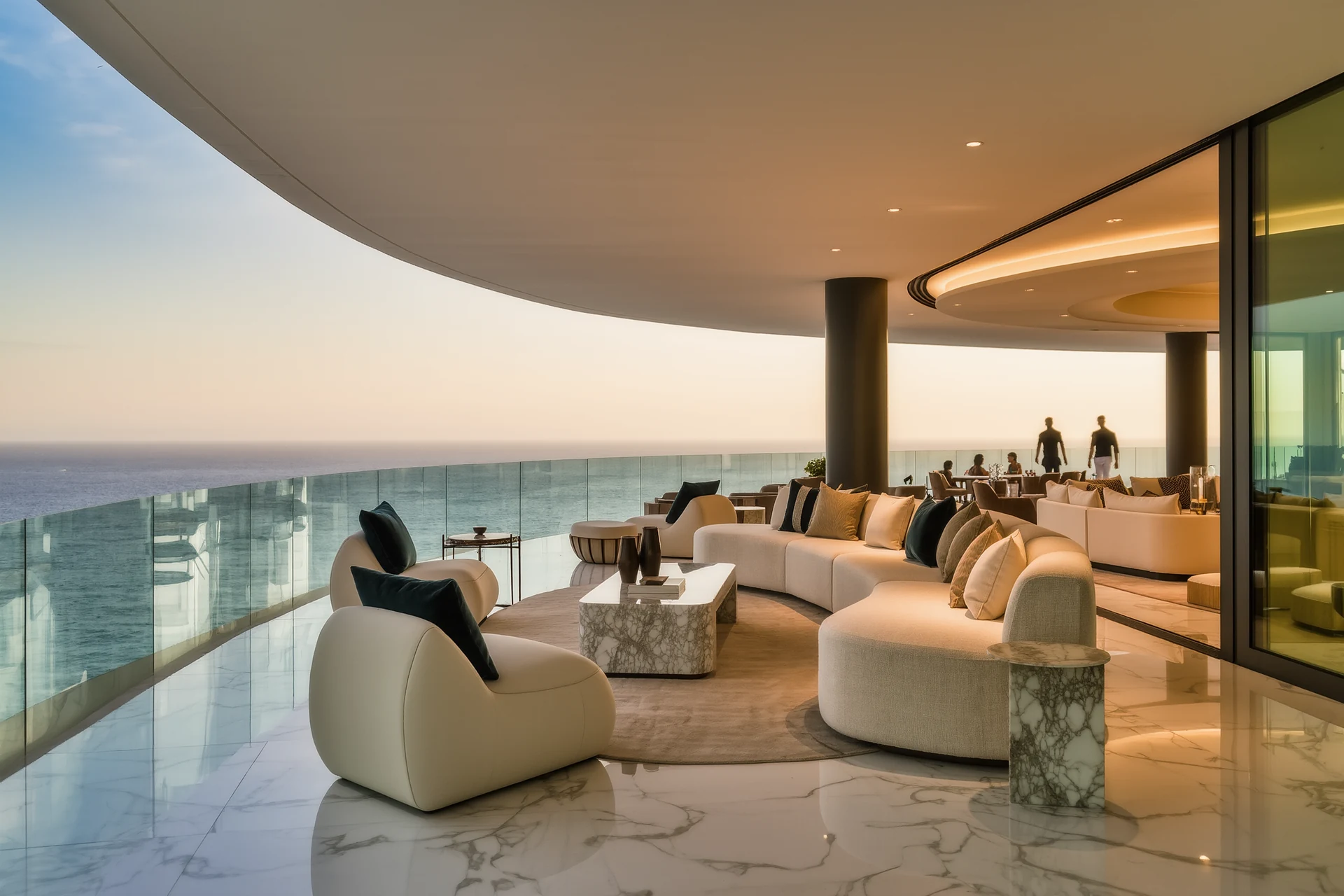
Luxury Apartments on the Costa del Sol: A Dream Destination for Discerning Homeowners
Find Your Dream Home on the Costa del Sol: Luxury Apartments That Impress The Costa del Sol has long been a magnet for people who love the Mediterrane…

Exquisite Mediterranean Villas on the Costa del Sol
Exquisite Mediterranean Villas on the Costa del Sol: A Guide for Discerning Buyers Wondering how to find the perfect Mediterranean villa on the Costa …

Luxury Real Estate on the Costa del Sol: An Exclusive Investment
Luxury Real Estate on the Costa del Sol: An Exclusive Investment. Here’s Why It Pays Off The Costa del Sol has long been a magnet for affluent …