Costa del Sol Living Guide 2026
Costa del Sol Living Guide 2026: zones, cost of living, healthcare, schools, visas and property prices from Marbella to Nerja for your move to southern Spain.…
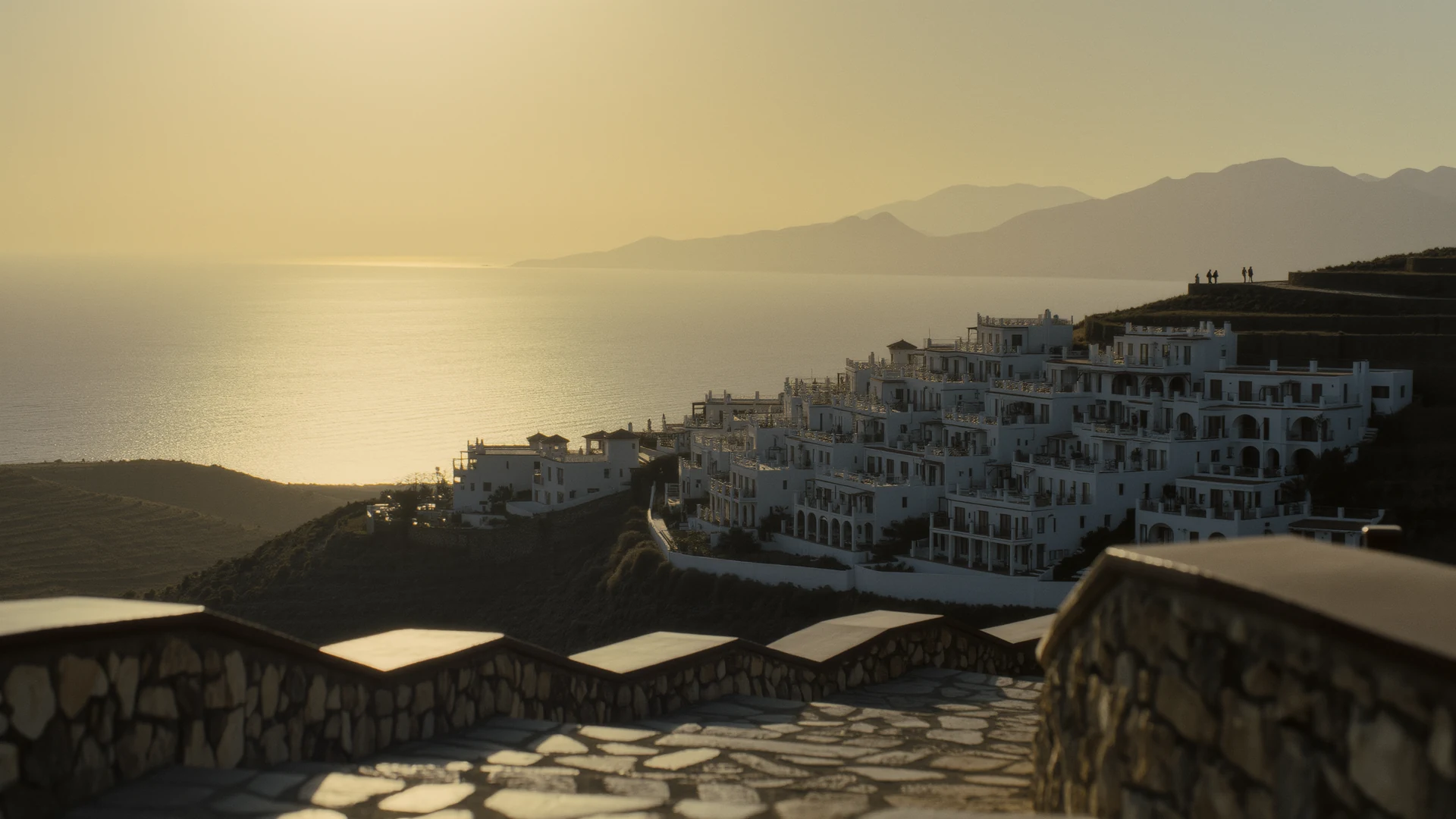
The Costa del Sol stretches roughly 160 kilometres along Andalusia's coast with 320+ days of sunshine, offering three distinct zones, world-class healthcare, and a cost of living from about 2,100 to 4,500 euros monthly.
Key Takeaways
- The Costa del Sol divides into three zones: the expensive, international Western coast (Marbella to Estepona), the Central zone around Malaga city, and the more affordable, authentically Spanish Eastern coast (Rincon de la Victoria to Nerja).
- A comfortable middle-class couple budgets about 3,200 to 4,500 euros per month in Marbella, versus 2,100 to 2,800 euros per month on the Eastern Costa del Sol around Nerja, Torrox, or Torre del Mar.
- Property prices range from 1,800 to 3,200 euros per square metre in the east up to over 8,000 euros per square metre in prime frontline Marbella; buyers should budget 10 to 13 percent above the price for taxes and fees.
- Spain's healthcare ranks among the world's top five, with private insurance costing roughly 100 to 150 euros monthly for a healthy 55-year-old, served by hospitals like Hospital Costa del Sol and Hospital Quironsalud Marbella.
- Residency pathways include the Golden Visa (500,000 euro property investment), the Non-Lucrative Visa (about 28,800 euros annual income), and the 2023 Digital Nomad Visa, which grants a three-year permit taxed at a flat 24 percent.
- Malaga is a major tech hub, with the Malaga TechPark hosting over 650 companies including Google, Oracle, and Vodafone and employing more than 22,000 people.
- Malaga-Costa del Sol Airport (AGP) connects to over 150 destinations, while the AVE high-speed train reaches Madrid in 2 hours 30 minutes and the Cercanias rail serves coastal towns for as little as 2.70 euros.
🌐 Also available in: Deutsch
The Costa del Sol, literally the “Coast of the Sun”, stretches for approximately 160 kilometres along the southern Mediterranean coastline of Andalusia, Spain. Bathed in more than 320 days of sunshine each year and blessed with an average annual temperature of 19°C, this dazzling stretch of coast has evolved from a sleepy string of fishing villages in the 1950s into one of Europe’s most sophisticated, cosmopolitan, and desirable places to live. Whether you are a young professional seeking a vibrant remote-work hub, a family looking for safety and excellent international schools, a retiree chasing the dream of year-round warmth, or an investor hunting for strong capital appreciation, the Costa del Sol delivers on every front.
This comprehensive living guide covers everything you need to know about making the Costa del Sol your home: the geography and microclimates of its distinct zones, the cost of living in 2026, healthcare and education systems, residency and visa pathways, the property market broken down by municipality, transport and infrastructure, the social and cultural calendar, and the practical day-to-day realities that estate agents rarely mention. By the time you finish reading, you will have a clear, detailed picture of what life on the Costa del Sol genuinely looks, feels, and costs.
Geography and Microclimates: Choosing Your Zone
The Three Distinct Zones of the Costa del Sol
The Costa del Sol is not a monolith. It divides naturally into three principal zones, the Western Costa del Sol, the Central zone centred on Málaga city, and the Eastern Costa del Sol, each with its own personality, price point, and microclimate.
The Western Costa del Sol: Marbella to Estepona
The Western Costa del Sol runs from the provincial capital, Málaga, southwest through Torremolinos, Benalmádena, Fuengirola, Mijas Costa, and Marbella, all the way to Estepona and the border with Cádiz province at Sotogrande. This stretch is the most developed, the most international, and the most expensive. The Sierra de las Nieves mountain range shelters this section from cold northerly winds, creating a subtropical microclimate where bougainvillaea blooms in January and palm trees line every boulevard. Marbella and its surrounding urbanisations. Nueva Andalucía, San Pedro de Alcántara, Puerto Banús, and the Golden Mile, form the epicentre of luxury living, with property prices frequently exceeding €8,000 per square metre in prime frontline beach positions. Estepona, once Marbella’s quieter neighbour, has undergone a dramatic renaissance: its flower-bedecked Old Town, the newly extended palm-lined promenade, and major infrastructure investments have pushed prime apartment prices to €4,500, €6,000 per square metre.
Málaga City and the Eastern Costa del Sol
The Central zone revolves around Málaga city itself. Over the past decade, Málaga has transformed from a transit hub, somewhere people flew into and immediately left, into a destination city in its own right. The opening of the Pompidou Centre, the Carmen Thyssen Museum, the Soho arts district, and a wave of excellent restaurants and boutique hotels have earned Málaga the nicknames “the new Barcelona” and “the city where Silicon Valley meets the Mediterranean.” The Port of Málaga’s Muelle Uno development is a gleaming waterfront dining-and-leisure complex, while the historic centre’s pedestrianised Calle Larios rivals any shopping street in Europe. Málaga is also a serious tech hub; the Málaga TechPark (Parque Tecnológico de Andalucía) hosts more than 650 companies including Google, Oracle, and Vodafone, employing over 22,000 people. Apartment prices in the centre of Málaga range from €3,000 to €5,500 per square metre, with neighbourhoods like Pedregalejo and El Limonar commanding premiums for their beachside location and charming architecture.
The Eastern Costa del Sol: from Rincón de la Victoria eastward through Vélez-Málaga, Torre del Mar, Algarrobo, Torrox, and Nerja, offers a more authentically Spanish experience at significantly lower prices. This is the Costa del Sol of whitewashed villages clinging to hillsides, of chiringuitos serving espetos de sardinas (sardines grilled over open fires on the beach), and of a slower, more traditional rhythm of life. Nerja, the jewel of the eastern coast, is famous for its Balcón de Europa viewpoint and the spectacular Nerja Caves, one of Spain’s most visited monuments. Property here typically ranges from €1,800 to €3,200 per square metre, making it highly attractive for those seeking value without sacrificing coastal living. Torrox claims to have the best climate in Europe, with studies showing its average temperature and humidity are among the most stable and comfortable on the continent.
Cost of Living in 2026: A Realistic Breakdown
Monthly Expenses: Marbella vs. the Eastern Coast
One of the most common questions posed by would-be residents is, “How much does it really cost to live on the Costa del Sol?” The answer varies significantly depending on lifestyle and location, but the following figures represent a comfortable middle-class existence for a couple in Marbella (the most expensive option) versus the Eastern Costa del Sol.
In Marbella or Nueva Andalucía, a couple should budget approximately €3,200, €4,500 per month all-in, including: rent for a two-bedroom apartment or small townhouse (€1,500, €2,500 depending on proximity to the beach and amenities); electricity, water, gas, and high-speed fibre internet (€200, €350); a weekly shop at Mercadona, Carrefour, or the local market for fresh produce, fish, meat, and staples (€500, €650); private health insurance for two adults via companies like Sanitas, Adeslas, or DKV (€180, €280 combined); dining out twice per week, a mix of informal tapas bars and mid-range restaurants (€300, €450); a leased or financed vehicle including insurance and fuel (€400, €600); and incidentals such as clothing, entertainment, and mobile phones (€200, €400).
Living on a Budget: The Eastern Costa del Sol
On the Eastern Costa del Sol, say in Nerja, Torrox, or Torre del Mar, the same lifestyle can be achieved for €2,100, €2,800 per month. Rent drops to €700, €1,100 for a comparable two-bedroom apartment; utilities remain broadly similar; dining out is markedly cheaper, with a three-course menú del día typically costing €10, €14 compared to €15, €22 in Marbella; and car costs are slightly lower due to cheaper parking and insurance.
Property Purchase Costs: Taxes, Fees, and Legal Representation
Property purchase costs are another major consideration. Buyers should budget approximately 10bis13% above the purchase price for taxes and fees: the Property Transfer Tax (ITP) for resale properties is 7% in Andalusia (reduced from 8% in recent years); VAT (IVA) on new-build properties is 10%; notary fees, land registry fees, and legal representation typically add another 1.5bis3%. A reputable independent solicitor, always, always use a lawyer who is not connected to the estate agent or developer, will charge between €1,500 and €3,000 depending on the complexity of the transaction.
Healthcare: Among the Best in Europe
World-Class Hospitals and Public Healthcare Access
Spain’s healthcare system is consistently ranked among the top five in the world by the World Health Organization, and the Costa del Sol is home to some of the country’s finest public and private facilities. The Hospital Costa del Sol in Marbella, the Hospital Universitario Regional de Málaga, and the Hospital Quirónsalud Marbella (private) offer world-class care with many English-speaking doctors. For UK nationals, the Withdrawal Agreement has maintained access to Spanish public healthcare for those who were resident before 31 December 2020 and registered with the social security system. New arrivals post-Brexit must either obtain private health insurance, register as self-employed (autónomo) which grants access to the public system, or qualify through an employment contract.
Private Health Insurance and Prescription Costs
Private health insurance remains remarkably affordable by American or even UK private standards. A comprehensive policy with no excess for a healthy 55-year-old costs approximately €100, €150 per month. For a family of four, expect to pay €220, €350 per month. These policies typically include direct access to specialists without GP referral, short or zero waiting times for diagnostic tests, and coverage in modern private hospitals and clinics. Prescriptions dispensed through the Spanish public system are heavily subsidised, with residents with a Spanish health card paying only a percentage of the drug cost based on income.
Education: International Schools and Spanish Integration
International Schools: British Curricula and the IB
For families, the availability of high-quality education is often the single most important factor in deciding where to settle. The Costa del Sol does not disappoint. The western zone in particular hosts a concentration of excellent international schools that would rival any European region. Swans International School in Marbella, Aloha College in Nueva Andalucía, the English International College in Marbella, St. George’s British School in Málaga and San Pedro, and the Swedish School in Fuengirola all offer curricula based on the British system (IGCSE and A-Levels) or the International Baccalaureate. Annual fees range from approximately €6,000 for primary years to €12,000, €18,000 for senior school.
Spanish State Schools and Language Immersion Programmes
For those seeking full immersion, Spain’s state schools, colegios públicos and concertados (semi-private, state-subsidised), provide education entirely in Spanish and are free or low-cost. Many expatriate families report that their children become fluent within six to twelve months, an invaluable gift. The Junta de Andalucía also offers adult Spanish language classes at Escuelas Oficiales de Idiomas at highly subsidised rates.
Residency and Visa Pathways
The Golden Visa: Investment-Based Residency
The Non-Lucrative Residence Visa: Retiring or Living on Savings
The Digital Nomad Visa: Working Remotely from Spain
The post-Brexit landscape has reshaped residency options for non-EU citizens, but the pathways remain navigable and surprisingly varied. The Golden Visa (now undergoing legislative review but still available in 2026) grants residency to non-EU nationals who invest at least €500,000 in Spanish real estate, a threshold easily met in prime Costa del Sol locations. The Non-Lucrative Residence Visa allows individuals with sufficient economic means to reside in Spain without working; this requires proof of an annual income of approximately €28,800 for the primary applicant (4 x IPREM) plus €7,200 for each dependent, alongside comprehensive private health insurance and a clean criminal record. The Digital Nomad Visa, introduced in 2023, has been a game-changer for the Costa del Sol: remote workers employed by non-Spanish companies can obtain a three-year residence permit, taxed at a flat 24% rate (15% for the first €600,000 of income during the first four years under the Beckham Law regime, if applicable). Málaga in particular has become a magnet for digital nomads, with co-working spaces such as Innovation Campus, Living4Málaga, and The Club Málaga proliferating across the city.
Transport and Connectivity
Málaga-Costa del Sol Airport: Your International Gateway
Málaga-Costa del Sol Airport (AGP) is the principal international gateway, handling over 22 million passengers annually pre-pandemic and rebounding strongly. Direct flights connect Málaga to over 150 destinations including London, Amsterdam, Berlin, Stockholm, Moscow, Dubai, and multiple North American cities in summer. The airport is just 15 minutes from Málaga city centre and 35bis45 minutes from Marbella via the A-7 and AP-7 toll motorways.
Roads, Rail, and High-Speed Connections
The coastal A-7 autovía runs the entire length of the Costa del Sol, and while summer traffic can be heavy, especially between Fuengirola and Marbella, journey times are reasonable. The AP-7 toll road offers a faster, less congested alternative. The Cercanías Málaga suburban rail network connects the airport, Málaga city, Torremolinos, Benalmádena, and Fuengirola with clean, air-conditioned trains running every 20 minutes at peak times for as little as €2.70 per journey. A long-discussed extension of the railway to Marbella and Estepona remains in the planning stages, with construction tentatively scheduled to begin before 2030. The high-speed AVE train links Málaga’s María Zambrano station to Madrid in just 2 hours and 30 minutes, and to Barcelona in under 6 hours. Seville, Granada, and Córdoba are all reachable within 1.5 to 2.5 hours, making the Costa del Sol an excellent base for exploring Andalusia.
The Social and Cultural Calendar
Summer Ferias and the Starlite Festival
Semana Santa and Year-Round Traditions
Life on the Costa del Sol is lived outdoors, and the annual calendar is packed with ferias, festivals, and cultural events. The Málaga Feria in August is one of Spain’s largest and most vibrant street parties; Marbella’s Feria de San Bernabé in June brings flamenco, casetas, and fairground rides to the Arroyo de la Represa; the Starlite Festival in Marbella runs throughout the summer at the Nagüeles quarry, attracting international headliners from Lionel Richie to Maluma; and the International Film Festival in November brings Spanish and Latin American cinema to Málaga’s Cervantes Theatre and surrounding venues. Semana Santa (Holy Week) sees extraordinary processions of ornate religious floats carried through the streets of Málaga, a spectacle that draws hundreds of thousands of visitors. Every town and village celebrates its own feria, patron saint’s day, and romería, ensuring there is always a reason to gather, eat, drink, and dance.
Practical Tips for Daily Life
Learning Spanish and Navigating Bureaucracy
Learning at least conversational Spanish will transform your experience. While English is widely spoken in tourist zones and among the international community, dealing with bureaucracy, building genuine friendships with Spanish neighbours, and navigating everyday situations all require Spanish. The empadronamiento, registering on the municipal census at your local town hall, is a critical step that unlocks access to public services, discounted property taxes, and a range of benefits. Setting up utilities (electricity with Endesa or Iberdrola, water with Acosol or the local ayuntamiento provider, and internet with Movistar, Vodafone, or Orange) typically requires a Spanish bank account, an NIE (foreigner’s identification number), and, for non-residents, a larger deposit. The NIE itself can be obtained at a National Police station with a passport, a completed EX-15 form, the relevant fee (tasa) paid at a bank, and justification for needing the number.
Settling In: The Costa del Sol Lifestyle
The Costa del Sol offers a quality of life that is increasingly difficult to find elsewhere in Europe: a benign climate, excellent food and wine, a genuinely welcoming culture, top-tier healthcare and education, and a cost of living that, while rising, remains attractive compared to London, Paris, Zurich, or New York. Whether you are drawn to the glamour of Marbella, the urban energy of Málaga, the authentic charm of Nerja, or the whitewashed serenity of a pueblo blanco like Mijas or Casares, there is a corner of this sun-drenched coast waiting to be called home.
Banking, Finance, and Day-to-Day Administration
Opening a Spanish Bank Account
Digital Payments, Currency Exchange, and Tax Filing
Setting up your financial life on the Costa del Sol requires navigating Spain’s banking system, which is robust and well-regulated but has its own particular rhythms. Opening a Spanish bank account is essential for paying utilities, taxes, and receiving a salary if you work locally. Major banks serving the Costa del Sol include Santander, BBVA, CaixaBank, Sabadell, and Unicaja (the regional Andalusian bank with the strongest local branch network). Non-resident accounts are available to those without a residency card, though the documentation requirements are stricter than for residents. You will typically need your passport, NIE, proof of address, and proof of income or employment. Digital banking is excellent in Spain; Bizum, the Spanish instant-payment platform, is universally used and makes splitting bills, paying for services, and settling up with friends trivially easy. For currency exchange, specialist firms like Wise, Currencies Direct, and OFX consistently offer better rates than high-street banks for international transfers, a critical consideration for those moving savings or receiving pensions from abroad. Spain’s tax year runs from January 1 to December 31, and tax returns (declaración de la renta) are filed between April and June of the following year. Engaging a local gestor or asesor fiscal for your annual tax declarations is strongly recommended, as the Spanish system has deductions and allowances that are easily missed by the self-filer.
Pets and Animals on the Costa del Sol
Dog-Friendly Beaches and Veterinary Care
Bringing Pets to Spain: Requirements and Regulations
Spain is a pet-friendly country, and the Costa del Sol is exceptionally well set up for animals. Dogs are welcome on many beaches outside the peak summer months (June, September), and there are several dedicated dog beaches, including the Playa Canina de Fuengirola (adjacent to the Sohail Castle), Playa Canina de Torremolinos, and the designated dog area on Playa de la Rada in Estepona. Veterinary care is excellent and affordable: a standard consultation costs approximately €25, €40, vaccinations are cheap, and emergency vets are available 24/7 in every major town. Clinica Veterinaria Marbella, Hospital Veterinario Málaga Centro, and Clinica Veterinaria Estepona are all well-regarded. For those relocating from outside Spain, the pet passport scheme and the EU Animal Health Certificate facilitate bringing cats and dogs into the country, though post-Brexit requirements for UK pets are more involved, requiring an Animal Health Certificate, a valid rabies vaccination, and, for dogs, tapeworm treatment administered by a vet within a window of 24bis120 hours before travel. The Costa del Sol’s outdoor lifestyle means that pets are part of the fabric of daily life; you will see dogs in outdoor restaurants, on promenades, and in the parks and green spaces that dot every town. The sense of community extends to animals, with numerous local charities and rescue organisations actively rehoming abandoned animals and welcoming volunteers.
Shopping, Supermarkets, and Daily Supplies
Supermarkets and Hypermarkets: From Mercadona to Carrefour
Weekly Markets, International Shops, and Shopping Centres
Grocery shopping on the Costa del Sol covers the full spectrum: from hypermarkets like Carrefour (with branches in Málaga, Marbella, Fuengirola, and Estepona) and Alcampo to mid-range supermarkets like Mercadona (the undisputed king of Spanish grocery shopping, with an excellent own-brand range, fresh produce, and fish counters that rival specialist fishmongers), Lidl, Aldi, and Día. For international products, Iceland in Fuengirola stocks British frozen goods and pantry staples; the Taste of America stores in Marbella and Fuengirola carry US products; and specialist Scandinavian, German, and Dutch shops are scattered along the coast. The open-air markets, mercadillos, are a weekly ritual in every town: the La Cala market (Wednesdays and Saturdays), the Fuengirola market (Tuesdays and Fridays at the Recinto Ferial), the Estepona market (Sunday mornings), and the Marbella market (Monday mornings) offer fresh produce, cheese, olives, spices, clothing, and household goods at prices significantly below supermarket levels. For shopping beyond groceries, the La Cañada centre in Marbella, the Plaza Mayor complex near Málaga airport, and the Miramar centre in Fuengirola are the major retail destinations, each with hundreds of shops, restaurants, and cinemas. El Corte Inglés, Spain’s premium department store, has a large branch in Málaga city and smaller outlets in Marbella and Fuengirola, offering everything from fashion and cosmetics to electronics and gourmet food halls.
Frequently Asked Questions (FAQ)
How much does it cost to live on the Costa del Sol in 2026?
A comfortable middle-class couple should budget about 3,200 to 4,500 euros per month in Marbella or Nueva Andalucia, the most expensive area. On the Eastern Costa del Sol, in towns like Nerja, Torrox, or Torre del Mar, the same lifestyle costs roughly 2,100 to 2,800 euros per month, mainly due to lower rent and cheaper dining.
What are the three zones of the Costa del Sol?
The Costa del Sol divides into three zones. The Western zone runs from Malaga through Marbella to Estepona and is the most developed, international, and expensive. The Central zone centres on Malaga city, now a destination and tech hub. The Eastern zone, from Rincon de la Victoria to Nerja, offers a more authentically Spanish experience at significantly lower prices.
How much does property cost on the Costa del Sol?
Prices vary widely by location. Prime frontline beach property in Marbella frequently exceeds 8,000 euros per square metre, while Estepona ranges from 4,500 to 6,000 and central Malaga from 3,000 to 5,500. The Eastern coast around Nerja is the best value at 1,800 to 3,200 euros per square metre. Buyers should budget 10 to 13 percent above the price for taxes and fees.
What visa options are available for moving to the Costa del Sol?
Non-EU citizens have three main pathways. The Golden Visa grants residency for investing at least 500,000 euros in Spanish real estate. The Non-Lucrative Residence Visa suits those living on savings, requiring about 28,800 euros annual income. The Digital Nomad Visa, introduced in 2023, gives remote workers a three-year permit taxed at a flat 24 percent rate.
Is healthcare good on the Costa del Sol?
Yes. Spain's healthcare system is consistently ranked among the top five in the world, and the Costa del Sol hosts excellent facilities like the Hospital Costa del Sol in Marbella and the Hospital Universitario Regional de Malaga, with many English-speaking doctors. Private health insurance is affordable, costing roughly 100 to 150 euros monthly for a healthy 55-year-old.
What international schools are on the Costa del Sol?
The western zone hosts a strong concentration of international schools, including Swans International School in Marbella, Aloha College in Nueva Andalucia, the English International College in Marbella, St. George's British School, and the Swedish School in Fuengirola. They follow the British system or International Baccalaureate, with annual fees from about 6,000 euros for primary to 12,000 to 18,000 for senior school.
How do you get to the Costa del Sol and travel around it?
Malaga-Costa del Sol Airport (AGP) is the gateway, connecting to over 150 destinations and sitting just 15 minutes from Malaga city centre. The coastal A-7 autovia and AP-7 toll road run the length of the coast, the Cercanias suburban rail serves coastal towns from 2.70 euros, and the AVE high-speed train reaches Madrid in 2 hours 30 minutes.
Which town on the Costa del Sol has the best climate?
Torrox, on the Eastern Costa del Sol, claims to have the best climate in Europe, with studies showing its average temperature and humidity are among the most stable and comfortable on the continent. The wider region enjoys more than 320 days of sunshine each year and an average annual temperature of 19 degrees Celsius.
What taxes and fees apply when buying property on the Costa del Sol?
Is Malaga a good base for remote workers and tech professionals?
Is the Costa del Sol pet-friendly?
More from Mediterranean Lifestyle

Costa del Sol Family Guide
Costa del Sol family guide: the best towns, international schools, healthcare, childcare costs, kids’ attractions and rainy-day ideas for famili…

Top 5 Best Places to Live on the Costa del Sol
Thinking about making the move to the Costa del Sol? Smart choice! It’s a fantastic part of Spain with a lot to offer. But with so many beautifu…
Spanish Mediterranean Living: Embracing the Good Life
Spanish Mediterranean living isn’t just about a beautiful coastline; it’s a whole vibe. Think of it as a deliberate choice to slow down, s…